

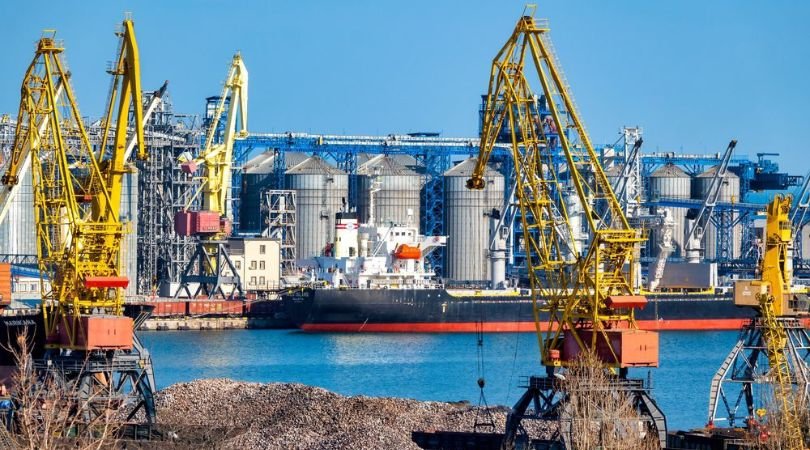
Ukraine remains one of the world’s leading grain exporters, with marine terminals serving as a critical link in the agricultural supply chain. This is where grain delivered by rail and road must be transferred to ocean-going vessels quickly, continuously, and with maximum operational efficiency.
However, modern grain terminals operate in an environment of constant uncertainty. Irregular grain inflows, seasonal peak loads, rising electricity costs, vessel delays, and the human factor all have a significant impact on terminal productivity and profitability. Under these conditions, intelligent automation has become one of the most effective tools for improving operational performance.
Key Challenges Facing Modern Grain Terminals
Seasonal Peak Loads
Following the harvest season, grain terminals operate around the clock at maximum capacity. Any unplanned shutdown or even a temporary reduction in throughput can disrupt the entire export supply chain.
Irregular Grain Flow
Grain arrives at varying rates due to railway delays, truck scheduling issues, and the operational characteristics of inland elevators. As a result, conveyor systems constantly fluctuate between overload conditions and inefficient idle operation.
Human Factor
Even experienced operators cannot coordinate dozens of conveyors, bucket elevators, gates, valves, and transport routes in real time. Consequently, equipment frequently operates below its optimal performance level.
High Energy Consumption
Conveyor systems consume substantial amounts of electrical power. When motors operate under partial load or run unnecessarily, the energy cost per ton of grain handled increases significantly.
Demurrage Costs
Every hour of vessel loading delay can result in tens of thousands of dollars in demurrage charges. Therefore, the speed and stability of terminal operations have a direct impact on financial performance.
Blend Accuracy
Export contracts require grain to meet strict quality specifications, including protein content, gluten levels, and other key parameters. Achieving these standards requires precise blending of grain from multiple silos during vessel loading.
Equipment Wear and Grain Damage
Irregular material flow increases mechanical stress on conveyors, gearboxes, and drive systems while also raising the percentage of damaged grain, directly reducing its market value.
SENUMAC — The Digital Autopilot for Material Handling Systems
To address these challenges, the Ukrainian engineering company S-Engineering developed and patented SENUMAC, an intelligent control system for bulk material handling and conveyor operations.
SENUMAC creates a real-time mathematical model of material flow and automatically coordinates every element of the conveying system. Its algorithms continuously analyze conveyor loading, transport speeds, and equipment status, maintaining optimal operating conditions without operator intervention.
What Results Does SENUMAC Deliver?
Up to 25% Higher Throughput
SENUMAC maintains conveyor loading at a stable 90–95% of rated capacity and reaches the optimal operating mode approximately four times faster than manual control.
As a result, conveyor system productivity increases by 14–25%, reducing vessel loading time and increasing annual terminal throughput without expanding existing infrastructure.
Up to 33% Energy Savings
The system eliminates idle equipment operation, optimizes conveyor speeds, and balances loads across the entire transport line.
The result is an energy consumption reduction of 15–33%, significantly lowering operating costs.
Automated Grain Blending
SENUMAC simultaneously controls material flow from multiple silos, automatically maintaining predefined blending ratios according to the required grain specifications. This ensures consistent product quality without manual adjustments.
Reduced Equipment Wear
A stable and continuous material flow eliminates sudden starts, overloads, and productivity fluctuations. This extends the service life of conveyors, gearboxes, and drive systems while reducing maintenance costs and unplanned downtime.
Improved Grain Quality
Maintaining a dense and uniform material flow minimizes mechanical grain damage and creates a self-lining effect that reduces product breakage during transportation.
Proven Performance in Commercial Operation
SENUMAC has been successfully deployed at leading Ukrainian grain terminals with a combined annual handling capacity exceeding 15–18 million tonnes.
Implemented projects include:
-
COFCO International (Mykolaiv);
-
POSCO International / Orexim (Mykolaiv);
-
Greentur-Ex / Bunge (Mykolaiv Commercial Sea Port);
-
Novotech Terminal (Odesa Commercial Sea Port);
-
Risoil Terminal (Port of Chornomorsk).
Conclusion
Today’s grain terminals compete not by the amount of installed equipment, but by how efficiently that equipment is utilized. Intelligent material flow management enables operators to increase throughput, reduce energy consumption, minimize operational risks, and preserve grain quality without costly infrastructure expansion.
That is why SENUMAC is far more than a conveyor automation system. It is a digital optimization platform for port logistics that enables grain terminals to unlock the full potential of their existing assets while improving operational efficiency, profitability, and long-term competitiveness.
