

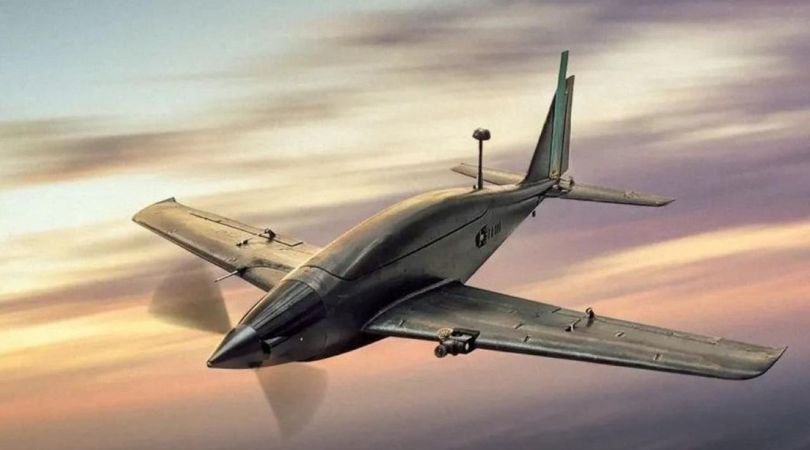
Ukraine’s Ministry of Defence has codified the Cyclops unmanned aerial system — a Ukrainian interceptor drone designed to engage both aerial and ground targets. The system has already been used against various Russian UAVs, including Shahed, Orlan, ZALA, Supercam and Lancet drones.
Codification means that the system has successfully passed the required evaluation procedures and can now be centrally supplied to Ukraine’s Defence Forces. But the bigger story is what Cyclops represents: a shift in the way modern air defence is being designed.
The mass use of drones has exposed a growing problem with the traditional model of using expensive missiles against relatively cheap UAVs. Ukraine needs systems that can detect and destroy aerial threats quickly while remaining economically viable. Specialized interceptor drones are emerging as one of the answers.
Cyclops: More Than Just Another UAV
The system was developed by a Ukrainian defence company with experience in designing weapons and military equipment. Different Cyclops variants have already been deployed on the battlefield, allowing developers to refine the platform based on real combat experience.
The key advantage of the system is the combination of compact size, manoeuvrability and endurance. Cyclops can be used against both aerial and ground targets, while dedicated variants are designed specifically for intercepting enemy UAVs.
This is particularly important in an environment where the aerial situation can change within minutes. An interceptor needs more than speed: it must be highly responsive, capable of rapidly adjusting its trajectory and maintaining control during the engagement.
What Is Known About Its Capabilities
Most of the Cyclops’ technical specifications remain undisclosed. According to publicly available information, the drone has a wingspan of less than one metre and an endurance of up to approximately 90 minutes.
Its compact dimensions help reduce its visual signature while making deployment easier. At the same time, the system can operate at significant altitudes, expanding its ability to engage reconnaissance and strike UAVs.
Its operational range also makes Cyclops relevant not only on the battlefield, but potentially as part of the protection of cities and critical infrastructure.
Cyclops V2 Against Russian UAVs
The best-known version of the system is Cyclops V2. According to its developers, the interceptor has already destroyed more than 100 aerial targets.
These reportedly include Orlan, ZALA and Supercam reconnaissance drones, as well as Lancet, Molniya, Gerbera and other Russian UAVs.
One particularly notable engagement involved the interception of a Russian Shahed over Russia’s Kursk region. The episode demonstrated that Ukrainian interceptor drones can be used not only against relatively small reconnaissance UAVs, but also against strike drones capable of operating at considerable speed and range.
Why Interceptor Drones Are Becoming More Important
The development of interceptor drones is a direct response to the changing nature of the aerial threat. An adversary no longer needs to deploy expensive aircraft or cruise missiles: a mass attack involving dozens or even hundreds of relatively inexpensive UAVs can place enormous pressure on an air-defence network.
As a result, modern air-defence effectiveness is increasingly determined not only by detection range and missile performance, but also by the cost of each interception, reaction time and the ability to scale protection.
Cyclops fits directly into this emerging concept. It is an example of how Ukraine’s defence industry is responding to a mass UAV threat with scalable, technology-driven and potentially more cost-effective interception systems.
Such platforms are unlikely to replace conventional air defence. Instead, they could become an important additional layer — particularly in situations where using expensive surface-to-air missiles against relatively low-cost drones is neither economically nor tactically optimal.
