

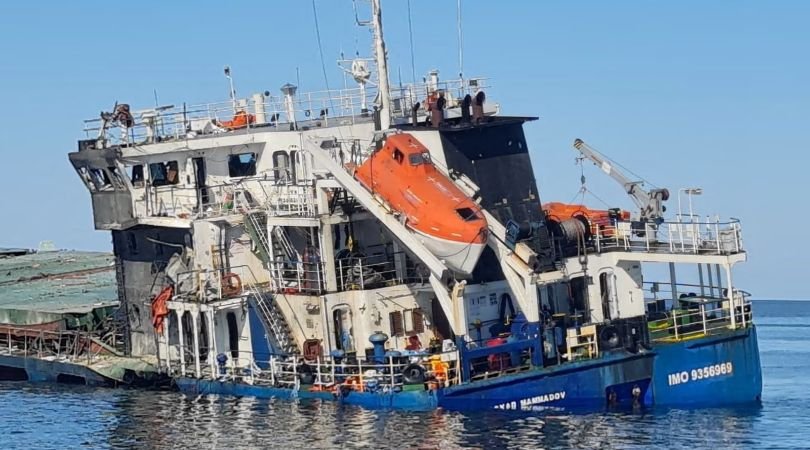
In 2026, attacks on ships in the Black Sea claimed more lives than the attacks on shipping in the Strait of Hormuz and the Middle East during the US war with Iran. The threat is already extending beyond Ukrainian and Russian waters, drawing closer to the shores of NATO countries.
According to data from the maritime security firm Ambrey, as reported by The Wall Street Journal, more than 300 attacks have been recorded in the Black Sea this year. More than 30 seafarers have been killed and over 20 are missing, according to reports from the Turkish Shipowners’ Association, MarineTraffic and local authorities.
By way of comparison: since the start of the US-Iran war in late February, there have been around 130 attacks in the Strait of Hormuz and the wider Middle East region, resulting in the deaths of 25 seafarers, according to the International Maritime Organisation.
Russian forces are attacking merchant ships carrying food out of Ukraine. Ukraine is also carrying out drone strikes against Russian shipping on the other side of the sea. Shipping companies have altered their routes in an attempt to stay clear of dangerous areas, but the attacks have now spread to Romanian and Bulgarian waters.
In October, almost half of the attacks on around a dozen vessels off the coasts of these two countries resulted in the deaths, disappearances or injuries of seafarers. Some European leaders have linked these incidents to Russia; Moscow denies any involvement.
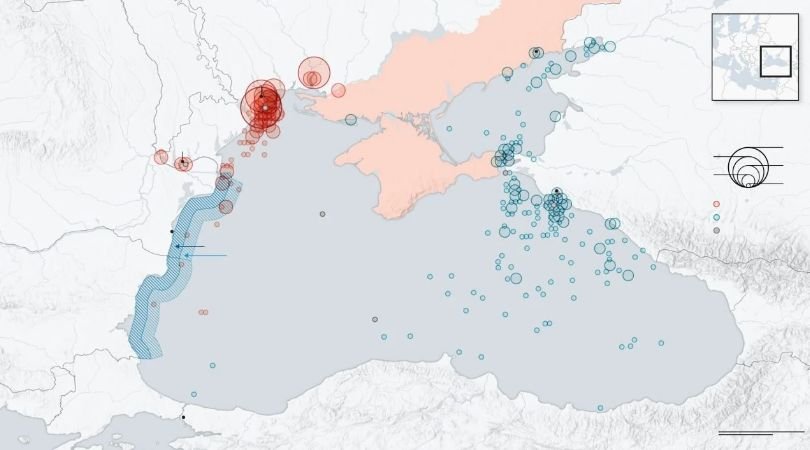 For NATO, this is a new challenge on its eastern flank. According to the WSJ, Romania and Bulgaria are particularly vulnerable due to their comparatively weak military capabilities and civil defence. The allies are channelling resources to assist the region. The European Commission has announced that it is speeding up the establishment of a Black Sea maritime security centre, without naming Russia as responsible for the recent attacks.
The impact is already being felt in the fishing industry. In October, the number of vessels entering the Black Sea via the Bosphorus fell by 41 per cent compared with October 2025. The total number of passages in both directions fell by 38 per cent, according to data from Global Fishing Watch.
Over the summer, Ukrainian drone attacks forced Russia to halt most of its maritime shipments for several months. In recent weeks, ships bound for or departing from ports in Ukraine, Romania, Bulgaria, Turkey and Georgia have largely been staying close to the coast, seeking shelter from Russian strikes.
For Ukraine, these routes are the means by which its harvest is exported. For countries in Africa and parts of the Middle East that rely on Ukrainian food supplies, their security is directly linked to food supplies.
The Black Sea has become the deadliest for merchant shipping
