

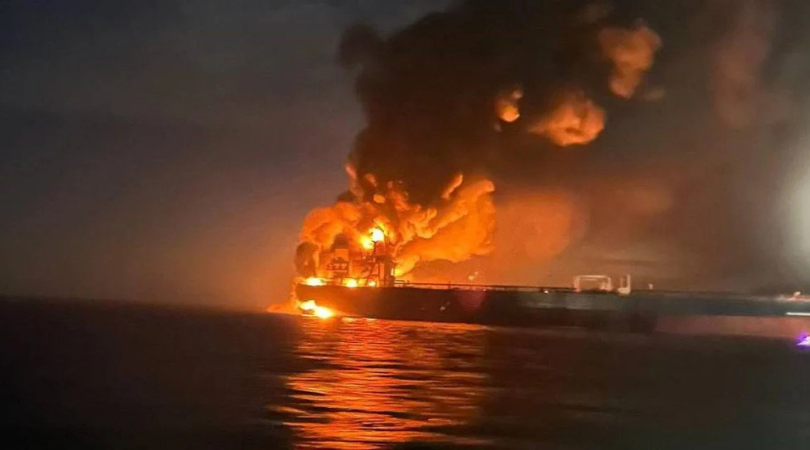
Russia temporarily suspended navigation through the Don–Azov Canal and the Kerch Strait following a series of Ukrainian strikes on vessels in the Sea of Azov. Together, these two waterways form a critical export route linking Russia’s inland ports with the Black Sea and global markets. Even a short disruption can significantly affect the country’s exports of grain, metals, and petroleum products.
According to reports, the initial attack targeted 13 Russian vessels, most of them shadow fleet tankers. The following day, Ukrainian forces reportedly struck another 28 vessels. In total, 76 Russian ships of various types were reportedly hit between July 6 and July 11.
The disruption of this transport corridor, which handles a substantial share of Russia’s grain exports, raised concerns in global agricultural markets and contributed to higher grain prices on international exchanges.
At the same time, Ukraine has continued targeting military and energy infrastructure in occupied Crimea. According to The Telegraph, the peninsula is experiencing growing logistical challenges, power outages, shortages of water and fuel, and increasing costs for local businesses. The tourism sector has also been affected, with a sharp decline in demand and widespread hotel booking cancellations.
The newspaper argues that Ukraine’s campaign to isolate Crimea is gradually turning the peninsula from a symbol of Russia’s annexation into an increasingly costly strategic burden for the Kremlin.
