

It is noted that the new license issued by the U.S. Treasury allows individuals and companies to make certain administrative payments in Russia, including paying taxes, fees, and duties, as well as obtaining permits or licenses required for day-to-day operations. A key restriction remains the so-called “exit tax” — a payment that companies must make when leaving the Russian market. This requires a separate specific license from the Office of Foreign Assets Control (OFAC).
The institution has also extended a number of licenses permitting certain transactions involving several entities, including the Central Bank of Russia and the National Wealth Fund, with the exception of asset transfers or debits from accounts in the United States.
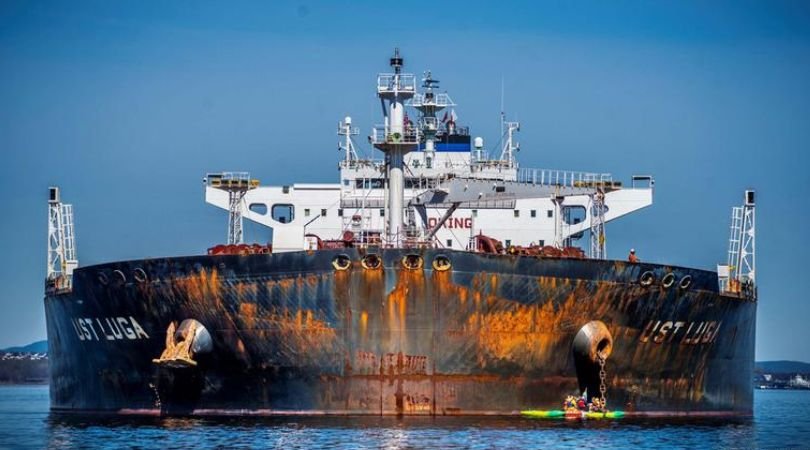
It is also reported that the United States is expected to soon announce an extension of authorization for the sale of sanctioned Russian oil. A similar situation applies to Iranian fuel. In March, the U.S. Treasury temporarily — until April 11 — lifted sanctions on exports of Russian oil and petroleum products that had already been loaded onto vessels. The same relief was granted for Iranian oil at sea.
U.S. Treasury Secretary Scott Bessent clarified that the purpose of these measures is to strengthen stability in global energy markets, where prices have surged due to the war in Iran. He also emphasized that this “will not bring significant financial benefit to the Russian government.”
At the same time, the average price of Russia’s Urals crude rose in March to its highest level since October 2023, reaching $77 per barrel. This is 73% higher than in February ($44.59) and also above the budgeted annual average of $59 per barrel. As a result, in April Russia is expected to receive around ₽700 billion ($8.9 billion) from the mineral extraction tax, compared to ₽327 billion in March — about 10% more than in April last year.
