

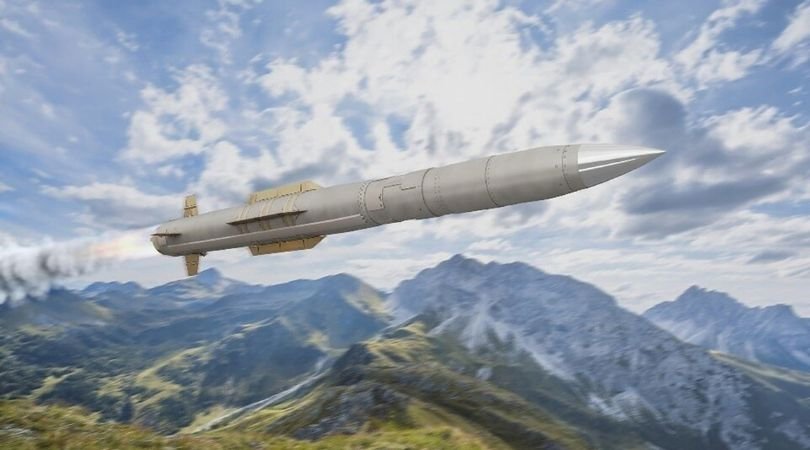
Germany is seeking to deepen defense-industrial cooperation with the United States by expanding licensed production of American weapons in Europe. Among Berlin’s key priorities are PAC-3 interceptors for Patriot air-defense systems and Tomahawk cruise missiles.
The initiative comes as NATO countries face growing pressure on their stocks of air-defense interceptors and precision munitions after years of high consumption caused by the war in Ukraine and conflicts in the Middle East.
Germany Seeks U.S. Approval to Produce PAC-3 and Tomahawk Missiles in Europe
German Defense Minister Boris Pistorius and U.S. Defense Secretary Pete Hegseth signed a letter of intent in Washington on September 15 aimed at strengthening cooperation between the American and European defense industries.
The agreement is intended to expand cooperation in joint development, production, licensed manufacturing, and the maintenance and repair of military equipment.
For Berlin, one of the main objectives is to establish additional production capacity in Europe for weapons that are currently manufactured primarily in the United States. Germany wants European defense companies to play a larger role in producing advanced American systems while strengthening transatlantic supply chains.
Germany already has experience with licensed production and industrial cooperation involving U.S. military technology. German companies manufacture components for the F-35 fighter aircraft, while Berlin is also expanding its role in the Patriot missile supply chain.
A new Patriot missile production facility is being established in Schrobenhausen, Bavaria. Production is expected to begin in 2027, creating additional European capacity for one of NATO’s most important air-defense systems.
Berlin is now seeking to expand this cooperation to more advanced weapons, particularly PAC-3 interceptors and Tomahawk cruise missiles.
Germany is also preparing to acquire Tomahawk missiles from the United States. The planned procurement is intended to strengthen Germany’s long-range strike capabilities, while discussions with Washington are also addressing broader industrial cooperation around these systems.
For Germany, the objective goes beyond purchasing individual weapons. Berlin is seeking a larger role for European industry in the production, maintenance and modernization of advanced military systems.
As Pistorius has argued, combining American technology and European industrial capacity could allow NATO countries to manufacture urgently needed weapons in greater quantities and reduce pressure on individual production facilities.
Why PAC-3 Production Matters for Ukraine’s Air Defense
The PAC-3 issue is particularly important for Ukraine.
Patriot systems equipped with PAC-3 interceptors are among the Western air-defense capabilities used by Ukraine against Russian ballistic missile attacks. Unlike conventional air-defense missiles designed primarily for aircraft and cruise missiles, PAC-3 is specifically designed to intercept tactical ballistic missile threats.
This makes the availability of PAC-3 interceptors a critical factor in Ukraine’s ability to protect major cities, military facilities and critical infrastructure from ballistic missile attacks.
The problem is that the number of available interceptors is limited. Ukraine has received Patriot systems and missiles from several Western partners, but the consumption of interceptors during sustained combat places considerable pressure on international stocks and production capacity.
The situation has become even more complicated as U.S.-made air-defense missiles have also been required by Israel and other American partners during conflicts in the Middle East.
This has created competition for a limited industrial resource: highly sophisticated interceptors that cannot simply be manufactured at the same speed as conventional ammunition.
Germany has already become one of the important European countries supporting Ukraine’s air-defense capabilities. Berlin has financed additional Patriot missiles and has repeatedly discussed ways to accelerate deliveries of air-defense ammunition to Ukraine.
The broader issue is therefore not simply how many Patriot launchers Ukraine has, but how many interceptors can be produced and delivered to keep those systems operational over the long term.
Expanding production capacity in Europe could eventually reduce some of the pressure on U.S. manufacturers and create an additional source of supply for NATO countries and potentially Ukraine.
However, this would not provide an immediate solution to Ukraine’s current shortage. Establishing a new production line for a highly sophisticated missile requires technology transfer, specialized equipment, qualified personnel and reliable supply chains for advanced components.
Can European Production Solve the Patriot Missile Shortage?
Germany’s initiative reflects a much broader transformation of Europe’s defense industry.
The war in Ukraine has demonstrated that modern high-intensity warfare can consume precision weapons, air-defense interceptors and other advanced munitions at a rate far exceeding traditional peacetime planning assumptions.
For decades, many European countries maintained relatively limited ammunition stocks and relied heavily on international supply chains. The war has exposed the limitations of that model and increased pressure on governments to rebuild domestic production capacity.
Licensed production of American weapons in Europe could become one part of the solution.
For Germany, domestic production would provide several advantages: greater control over supply chains, additional manufacturing capacity, shorter logistical routes and the ability to support European NATO partners without relying exclusively on factories in the United States.
For Washington, European production could also provide additional industrial capacity while allowing U.S. manufacturers to focus on other requirements and maintain larger overall production volumes.
But there are significant obstacles.
PAC-3 is a highly complex weapon incorporating advanced guidance, electronics and propulsion technologies. Transferring the necessary technology to European manufacturers would require U.S. government approval as well as agreements with the American companies involved in the system.
The same applies to Tomahawk, which incorporates sensitive technologies and remains an important long-range strike capability for the United States.
Even if Germany receives the necessary licenses, building meaningful production capacity will take time. New factories and production lines must be established, workers trained and supply chains developed before output can reach significant volumes.
This means that German production would primarily represent a long-term solution rather than an immediate answer to Ukraine’s air-defense needs.
Nevertheless, the strategic implications could be significant. If Germany succeeds in expanding licensed production of American weapons, Europe could gradually develop a much larger industrial base capable of manufacturing and maintaining some of NATO’s most advanced systems.
For Ukraine, such a development could eventually mean a more stable supply of air-defense interceptors and reduced pressure on limited U.S. production capacity.
For NATO, it would strengthen the European pillar of the alliance and make transatlantic defense production more integrated.
The immediate challenge, however, remains unchanged: Ukraine needs air-defense interceptors now, while new European production facilities will require years to reach full capacity. Until then, Ukraine’s air-defense capabilities will continue to depend heavily on existing Western stocks, U.S. production and international mechanisms for financing and supplying additional weapons.
