

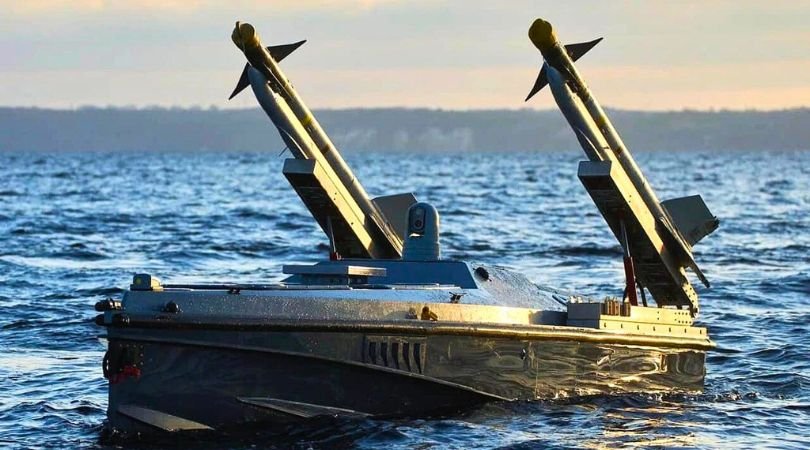
Ukrainian Magura V7 naval drones proved to be a key factor in securing victory in five scenarios during the REPMUS/Dynamic Messenger 2025 exercises off the coast of Portugal. Ukrainian-led forces simulated the destruction of an allied frigate, demonstrating new naval warfare tactics.
The naval drills became one of the most illustrative examples of innovation in the use of unmanned maritime technologies. A multinational group acting as the opposing force under Ukrainian command emerged as the main highlight of the exercises.
In fact, this team achieved a result that drew significant attention from participants: in all five scenarios, the simulated adversary outperformed the combined naval forces of NATO.
The defining moment of the drills — which effectively shifted the balance and caused considerable surprise — was an episode during a simulated attack on a maritime convoy. The Ukrainian side delivered enough strikes on a notional frigate for it to be considered destroyed under exercise criteria. Notably, several minutes later, the opposing crew was still discussing the possibility of an attack over open communications, unaware that they had already lost a unit within the scenario.
Magura V7 drones as the decisive tool
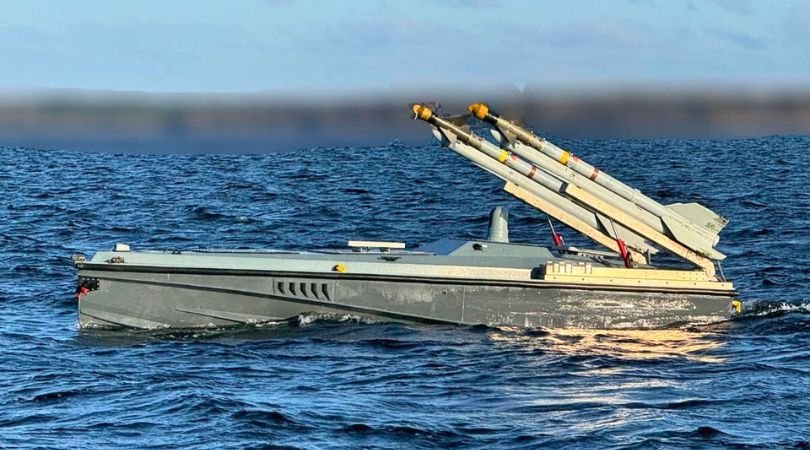
Ukrainian Magura V7 naval drones became the primary instrument of success. These systems have already gained recognition through their use in real combat conditions. During the exercises in Portugal, they served as the main strike and reconnaissance asset, enabling covert penetration of defended areas.
Magura V7 is a compact unmanned surface platform featuring high speed, low observability, and long-range remote control. Due to its small profile, it is extremely difficult to detect with radar, especially in complex maritime environments. This characteristic proved critical, as traditional detection systems failed to classify the threat in time.
Ukrainian operators leveraged sea conditions, weather, and convoy movement patterns to position the drones at an optimal attack distance. As a result, the strike was carried out before the defending side fully understood the nature of the threat.
 Why conventional fleets are vulnerable
The exercise results подтвердили a trend widely discussed by military analysts: conventional naval platforms are becoming increasingly vulnerable to small autonomous systems. Large vessels are designed to counter missiles, aircraft, and artillery, but small maritime drones present a fundamentally different type of threat.
Their challenge lies not only in low visibility but also in their ability to operate in coordinated groups and change trajectories in real time. Even modern frigates equipped with advanced sensors may detect such threats too late under certain conditions. The drills off Portugal effectively demonstrated that existing countermeasure strategies require significant revision.
An additional advantage for Ukraine was its practical combat experience. Unlike many allies, Ukrainian forces have been using maritime drones in real operational environments for years, allowing them to apply tactics based on real-world scenarios rather than theory.
Ukraine’s growing role in NATO naval programs
The fact that Ukrainian forces led the opposing force in such a large-scale NATO exercise is itself significant. It indicates that Ukraine’s experience is now viewed not only as regional, but as an important component of the future transformation of allied naval forces.
This also suggests that Ukraine is becoming a provider of tactical solutions in the field of unmanned naval warfare — contributing not only technology, but also shaping new standards for interaction between autonomous systems, ships, and command structures.
