

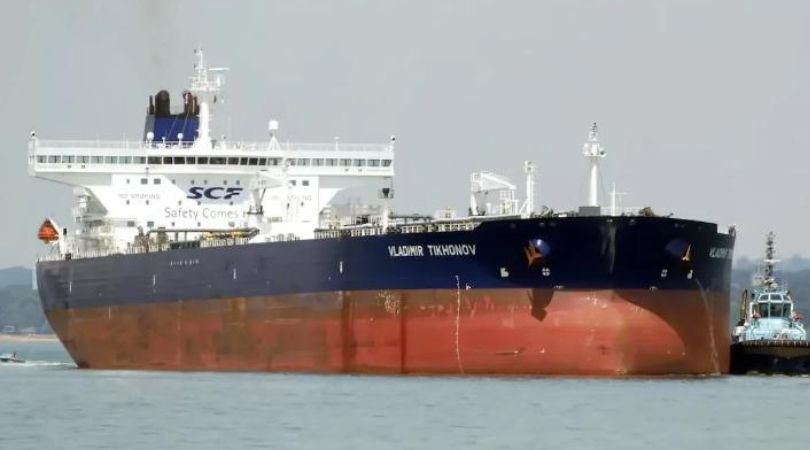
Russia’s seaborne crude oil exports have reached their highest level in the past two and a half years. According to Bloomberg, which cites tanker-tracking data, the average export volume for the four weeks ending on October 19, 2025, amounted to 3.82 million barrels per day. This is 80,000 barrels more than in the previous comparable period and the highest figure since May 2023.
During these four weeks, 35 oil tankers departed daily from Russian ports, just one vessel fewer than the record set in early 2022. In the week ending October 19, 34 tankers shipped 25.88 million barrels of Russian crude oil — almost the same as the previous week, when 35 vessels transported 27.2 million barrels.
What is behind the export growth
Despite sanctions and geopolitical tensions, Russia continues to actively adapt its supply routes. The bulk of its exports are now going to Asian countries, primarily China and India. Experts note that Moscow is finding new logistics schemes to circumvent Western restrictions by using a “shadow fleet” and mixed transshipment on the high seas.
Market influence
Analysts believe that the growth of Russian supplies may be restrained by the rise in global oil prices, as supply on the market remains high. At the same time, Russian ports are already operating almost at the limit of their technical capabilities, so further export growth may be difficult without new investments in transportation infrastructure.
Are sanctions against Russian oil shipping working?
After the outbreak of a full-scale war against Ukraine, the West imposed a series of sanctions on the Russian energy sector, including price restrictions on oil. However, Bloomberg data shows that crude oil exports by sea remain one of the main sources of foreign exchange earnings for the Russian budget.
Despite large-scale international sanctions, Russia has managed to partially maintain the volume of crude oil exports by sea. Data from analytical agencies, including Bloomberg and CREA, show that the restrictions have affected profitability but have not led to a significant reduction in supply volumes.
Sanctions are effective, but not blocking
After the introduction of the G7 price ceiling ($60 per barrel) and the ban on maritime deliveries to the EU, Russia lost a part of the European market. Western insurance companies and shipowners refused to service Russian cargo, making transportation more expensive and difficult.
However, the effect of the sanctions was limited: in the second half of 2023, Moscow refocused on Asia and created its own logistics infrastructure.
Shadow fleet and new routes
One of the key tools for circumventing sanctions has been the so-called “shadow fleet” – hundreds of old tankers under the “convenient flags” of Panama, Liberia, or the Marshall Islands. They do not use Western insurance and often change their names or owners to make them harder to track.
These vessels are actively supplying oil to India, China, Turkey, the UAE, and Malaysia, countries that have not joined the price ceiling. As a result, Russia maintains a high level of exports, albeit at significant discounts to global prices.
According to analysts, in 2023, Russia’s oil revenues fell by about 30% compared to 2021. However, already in 2025, the average volume of sea deliveries exceeded 3.8 million barrels per day, which is almost the same as before the war.
In other words, Russia sells almost as much oil, but at a lower price. This reduces budget revenues, but does not stop exports.
We recently wrote that the G7 plans to deprive Russia of $80 billion a year to undermine the Kremlin’s military economy. However, experts believe that the real effect is possible only if control over the “shadow fleet” is strengthened and such vessels are banned from entering EU and US ports. It is also necessary to stricterly adhere to the price limit by buyers, and to coordinate actions with large Asian consumers, in particular India and China. But the global situation shows that this is almost impossible. Without these steps, the sanctions pressure will remain relative and will not be able to completely restrict Russian shipping.
